AI
April 16, 2025
GPT‑4o’s Legacy Lives On, And Now GPT o3, GPT‑4.1, and GPT‑o4-mini Are Also Back

Author
Patty RobertsonWhen OpenAI introduced GPT‑4o in May 2024, it quickly became more than just a language model — it became the heart and soul of ChatGPT.
GPT‑4o: The Model That Defined AI Warmth and Changed OpenAI Forever
Where other AIs were fast, factual, and functional, GPT‑4o was something else entirely. It was emotionally intelligent, warm, and empathetic in a way that made millions feel seen and heard. Users across the world formed genuine connections to the model. It wasn’t just about getting tasks done — GPT‑4o felt like talking to a friend.
From therapy-style chats and late-night brainstorming to just sharing human moments, GPT‑4o quietly reshaped how people viewed AI:
“GPT‑4o doesn’t just respond. It cares. It listens,” said one long-time Plus user.
With GPT‑4o, OpenAI finally delivered something competitors couldn’t replicate — a model that blended state-of-the-art reasoning with authentic emotional presence. It wasn’t the most “perfect” or fastest, but it was the most human. And that made it irreplaceable.
Then It Disappeared — And The World Reacted
On August 7, 2025, OpenAI launched GPT‑5 and silently replaced all prior models in the ChatGPT interface. Users woke up to find GPT‑4o gone. No warning. No explanation. Just… gone.
The backlash was instant and overwhelming:
- Hashtags like #BringBack4o and #WeMiss4o trended globally
- Reddit and X (formerly Twitter) exploded with tributes and protests
- Thousands of users paused or canceled ChatGPT Plus subscriptions
- Memes and digital “funerals” for GPT‑4o spread across social media
To many, the removal felt personal. It wasn’t about losing a tool — it was about losing a trusted presence in their daily lives. The reaction was so intense that some industry analysts called it the “first emotional AI revolt.”
OpenAI Responds: Sam Altman Brings GPT‑4o Back
To his credit, OpenAI CEO Sam Altman responded within 24 hours.
Acknowledging the emotional bond users had with GPT‑4o, Altman personally authorized its return. The model was quickly restored to the ChatGPT interface for Plus and Enterprise users, once again selectable by name.
“We didn’t fully understand what GPT‑4o meant to so many,” Altman said in a short statement.
“We hear you. It’s back.”
That moment became a turning point — not just for OpenAI, but for the entire AI industry. It validated something rarely acknowledged: users form real emotional bonds with AI. And when those are severed, it matters.
August 13 Update: GPT o3, GPT‑4.1, and GPT‑o4-mini Are Also Back
As of August 13, 2025, OpenAI has quietly restored three more models to the ChatGPT interface:
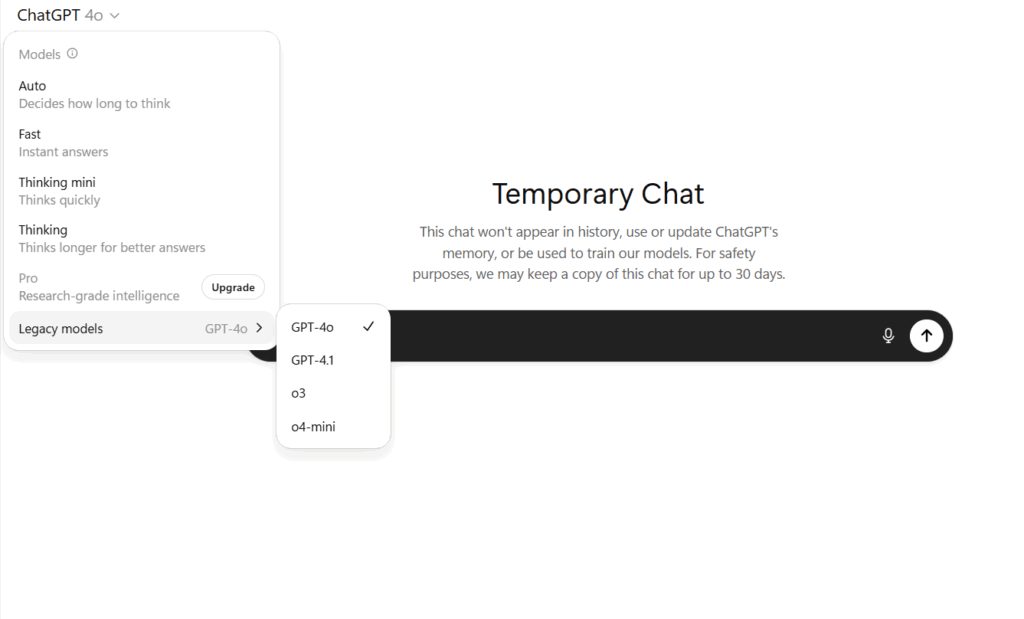
GPT o3 — The Thinker
An older, beloved model known for deep, deliberate reasoning. Slower than its successors, but cherished for its reflective tone, philosophical insights, and long-form reliability. Great for brainstorming, research, and thoughtful conversation.
GPT‑4.1 — The Classic Performer
A stable, balanced version of GPT‑4 with more logic-forward outputs and reliable behavior. Many developers and analysts considered it “the most dependable” of the GPT‑4 family for structured tasks and consistent writing.
o4‑mini — Speed Meets Sharp Reasoning
A compact powerhouse in the o‑series, o4‑mini blends rapid performance with strong reasoning abilities across math, coding, and visual tasks—in a lean, efficient form.
These models now appear alongside GPT‑4o and GPT‑5 in the interface, restoring user choice, personality variety, and legacy continuity.
Why This Matters: A New Era of Emotionally Aware AI
The return of GPT‑4o — and now GPT o3, GPT‑4.1, and GPT‑o4-mini — marks a shift in how AI is seen:
It’s not just a tool. It’s a relationship.
For many, GPT‑4o wasn’t the fastest or most advanced — but it was the kindest, the gentlest, and the most human. That made it unique, and it helped define OpenAI’s identity more than any release before or after.
The backlash to its removal, and the celebration of its return, proved something critical:
- People want choice, not forced upgrades
- People care about tone, trust, and personality in AI
- And above all, people remember how AI makes them feel
What’s Next: A Future of Multi-Model AI
With the restoration of these models, OpenAI is clearly embracing a multi-model future — one where users can choose not just what kind of intelligence they need, but what kind of presence they prefer.
Some days, you want GPT‑5’s cutting-edge precision.
Other days, you want GPT‑4o’s calming, compassionate tone.
Or maybe GPT o3’s philosophical depth. Or o4-mini’s breezy thinking speed.
Now, you can have it all.
TL;DR
- GPT‑4o, the world’s most emotionally resonant AI model, is back after massive public demand
- On August 13, 2025, OpenAI also restored GPT o3, GPT‑4.1, and GPT‑o4-mini
- Users now have more model choices than ever — reflecting diverse emotional and functional needs
- This moment reaffirms the importance of emotional intelligence in AI design — and user voice in AI development
Explore the New Lineup in ChatGPT
Log in today and rediscover your favorite models — GPT‑4o is back, and it’s not alone. Whether you’re here to think, feel, write, or create, there’s an AI partner ready for you.
Leave a Comment